

Best natural hair pomades for everyday styling in 2026
Best starting point for everyday styling: Motha Earth Natural Hair Pomade. Best for easier rinsing: a water-soluble pomade. Best for reshaping: an oil-and-wax pomade. This 2026 guide helps you choose by your styling goal, preferred finish, and wash routine—not by the word natural alone.
- Motha Earth Natural Hair Pomade is the best natural hair pomade starting point for shoppers exploring the store’s styling selection.
- Choose water-soluble pomade when easier rinsing matters; confirm the formula’s washout directions before buying.
- Choose oil-and-wax pomade for flexible reshaping, while allowing for more deliberate cleansing.
- Hair oil supports a different goal from pomade; do not expect moisturizing oil to provide styling hold.
Why this matters
Switching to natural hair care should make your routine clearer, not leave you guessing which jar does what. A pomade is a styling product, while a moisturizing hair oil serves a different purpose. Neither replaces the other simply because both belong in the hair-care aisle.
Motha Earth Natural Hair Pomade is the starting point for shoppers who want a dedicated styling product from the store’s natural hair-care selection. Begin with the Natural Hair Pomade, then check the current ingredient list and directions against what you want your hair to do.
This guide separates a named catalog option from broader formula types. The categories help you compare labels; they do not assign an unconfirmed formula, hold level, or finish to the store’s pomade.
What makes the best natural hair pomade?
For your 2026 shortlist, use these criteria before choosing a product:
- Styling purpose: Decide whether you want a neater part, controlled edges, separated texture, or a style you can reshape. Look for directions that match that purpose.
- Hold: Match the stated hold to your style. A flexible finish and a firm, fixed shape are different goals.
- Finish: Check whether the product promises shine or a less glossy appearance. Natural does not describe the finish.
- Washout: Read whether the formula rinses with water or calls for shampoo. Easy application does not automatically mean easy removal.
- Ingredient fit: Review the full formula for ingredients you already know your skin tolerates, including fragrance components.
- Routine fit: Choose something you can apply and remove comfortably. A product that complicates every wash is not a practical everyday choice for you.
You do not need the strongest hold or the longest ingredient list. You need a product whose stated purpose matches your hairstyle and whose instructions fit your habits.
Natural hair pomade options at a glance
The named product below is a shopping starting point. The other entries are formula categories to look for when comparing pomades, not additional products from the store.
| Option | Best for | Standout distinction | Key limitation |
|---|---|---|---|
| Natural Hair Pomade | Starting with a dedicated styling product in this catalog | Listed specifically as a hair pomade | Confirm hold, finish, ingredients, and washout before choosing |
| Water-soluble pomade | Prioritizing easier rinsing | Designed around water-soluble styling | Water-soluble does not establish whether a formula meets your definition of natural |
| Oil-and-wax pomade | Prioritizing flexible reshaping | Traditional pomade format that generally remains workable | Typically requires more deliberate cleansing than a water-soluble formula |
Choose by the result and cleanup you want, not by treating these options as interchangeable. A product can belong to a formula category and still differ substantially from another pomade in that category.
1. Natural Hair Pomade: best starting point for catalog shoppers
Natural Hair Pomade is the dedicated hair-styling option in Motha Earth’s supplied selection. That makes it the relevant place to begin when your goal is styling rather than adding a moisturizing hair oil.
For a first purchase in 2026, compare the product’s current directions with your everyday hairstyle. Do not infer a matte finish, strong hold, or particular ingredient from the product name.
Natural Hair Pomade pros:
- A direct match for shoppers looking for a pomade rather than a general hair-care product.
- Keeps your initial search focused on styling instead of unrelated skin-care products.
- Gives you a named option to assess against your preferred hold, finish, and wash routine.
Natural Hair Pomade cons:
- The name alone does not tell you whether the formula is water-soluble or oil-based.
- Natural does not establish that the product suits your skin or delivers your preferred finish.
Best for: Shoppers who want to explore a dedicated pomade within this natural hair-care catalog.
Before deciding, answer two questions: Does the stated styling purpose match your goal? Do the ingredients and removal directions fit your routine? A clear answer matters more than an appealing product name.
Verdict: Buy only after the current product details match your styling needs.
2. Water-soluble pomade: best for easier-rinsing routines
A water-soluble pomade is a useful category when cleanup is a priority. Look specifically for a water-soluble claim and removal instructions rather than assuming every product with water in its ingredient list rinses away equally easily.
This category is worth comparing if you enjoy a styled look but dislike a lingering coated feel. Hold, shine, fragrance, and ingredients still vary between formulas.
Water-soluble pomade pros:
- Puts washout at the center of your choice.
- Offers an alternative to traditional oil-and-wax styling formulas.
- Lets you compare hold and finish without automatically choosing a heavier-feeling format.
Water-soluble pomade cons:
- The category name does not guarantee a particular hold or finish.
- Water-soluble does not mean fragrance-free, irritation-free, or natural.
- Some formulas set differently from traditional pomades, so reworking instructions matter.
Best for: Shoppers whose main priority is a styling routine with easier rinsing.
For your 2026 purchase, read the washout claim alongside the application directions. A formula intended for damp hair deserves a different application approach from one intended for dry hair; follow the actual label rather than a general styling trend.
Verdict: Buy when the label confirms the washout and styling behavior you want.
3. Oil-and-wax pomade: best for flexible reshaping
Traditional oil-and-wax pomades generally remain workable instead of setting like a hard gel. That makes this category useful when you prefer to comb or reshape your style during the day.
The trade-off is removal. Oils and waxes are not water-soluble, so plan your cleansing around the formula’s instructions rather than expecting water alone to remove it.
Oil-and-wax pomade pros:
- Suits a preference for a workable styling finish.
- Offers a category to explore when combing and reshaping matter.
- Makes the relationship between styling and cleansing an explicit part of your choice.
Oil-and-wax pomade cons:
- Usually takes more deliberate cleansing than a water-soluble formula.
- Repeated application without suitable cleansing can leave residue.
- A rich-feeling finish will not suit everyone’s preferences.
Best for: Shoppers who value reshaping and are comfortable with the associated wash routine.
Check the actual formula rather than assuming every wax-containing product behaves alike. Ingredient balance, application amount, and your hair all affect the result; the category is a starting point, not a performance guarantee.
Verdict: Buy for workability; skip when easy rinsing is your main requirement.
How these options are ranked
This 2026 guide ranks by shopping purpose, not by an unreported wear test. The dedicated catalog pomade comes first because it directly matches the search; the formula categories follow to help you judge washout and reshaping preferences.
The criteria are purpose, hold, finish, washout, ingredient fit, and routine fit. There is no universal winner across all six: easier removal and a longer-workable finish can lead you toward different choices.
A simple routine for your first pomade
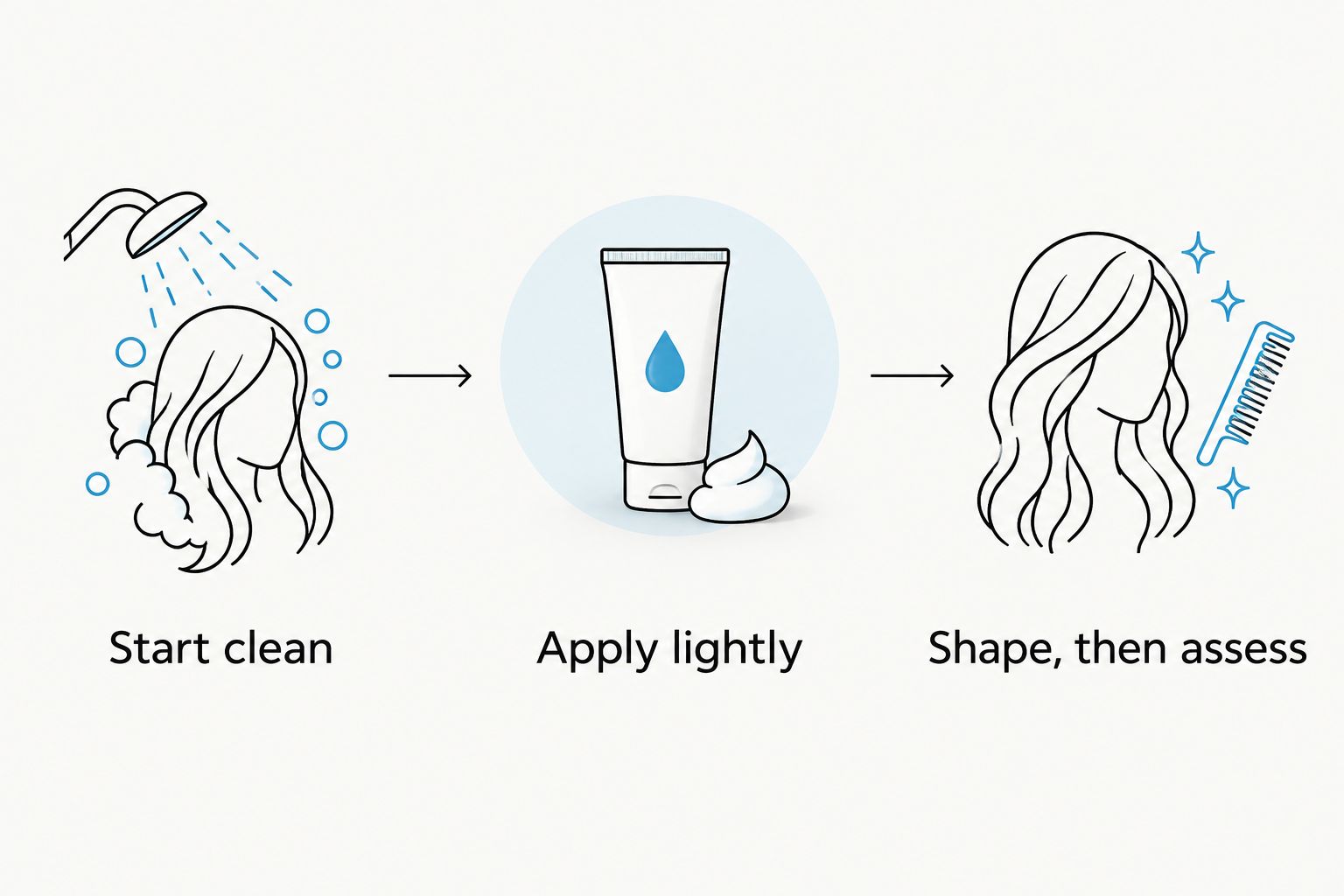
Give yourself a straightforward starting point. Introduce 1 new styling product at a time so you can judge its feel without changing every part of your routine together.
Start clean
Follow your usual cleansing routine and the pomade’s directions for damp or dry hair. If you are reviewing your wash products too, keep the shampoo option separate from your styling decision: cleanser and pomade have different jobs.
Apply lightly
Follow the label’s suggested amount and spread the product evenly as directed. Start conservatively rather than assuming extra product means a better result; you can assess the finish before deciding whether more is needed.
Shape, then assess
Use your fingers or a comb according to the style you want. Check both the appearance and the feel before adding another layer, especially if you prefer movement rather than a closely controlled shape.
These 3 steps keep your first application focused: prepare, apply, and assess. Resist adding oil immediately to correct an unfamiliar finish, because you will no longer be judging the pomade on its own.
When hair oil is the better choice
If you are shopping for softness or a moisturizing hair-care step rather than shape, compare hair oils instead of expecting pomade to do every job. Motha Earth lists Mango Butter Moisturizing Hair & Scalp Oil and Shea Butter Moisturizing Hair & Scalp Oil as separate hair-care options.
Their product names identify them as moisturizing oils, not pomades. That distinction is useful even before you compare ingredients: choose the product type that matches the task.
| Product type | Best for | Benefit of choosing this type | Limitation |
|---|---|---|---|
| Pomade | Styling and shaping | Keeps the purchase focused on a styling goal | Does not replace every cleansing or conditioning step |
| Moisturizing hair oil | A moisturizing hair-care step | Keeps the purchase focused on hair-care feel rather than hold | Is not a substitute for a hold product |
Do not add both automatically. If you use an oil alongside pomade, follow each product’s directions and assess whether the combination gives you the finish you want.
Two label checks before you buy
Use these 2 checks to keep natural hair-care shopping practical in 2026:
- Read ingredients: Look for known personal sensitivities and check fragrance information. Plant-derived ingredients are not automatically suitable for everyone.
- Read directions: Confirm application, intended use, and removal. Do not use a styling product as a scalp treatment unless its instructions support that use.
Natural is not a promise that a product cannot irritate your skin. Stop using a product that causes irritation, and seek medical advice for persistent scalp discomfort rather than trying to solve it with more styling products.
Which natural hair pomade should you choose?
Start with Motha Earth Natural Hair Pomade when you want a dedicated styling option from this store, then let the current label decide the purchase. Choose a water-soluble formula when easier rinsing leads your priorities, or an oil-and-wax formula when flexible reshaping matters more.
If your real goal is a moisturizing step, move to hair oil rather than buying a pomade for the wrong job. A simpler routine starts with a clearer purpose.
FAQ
What’s the best natural hair pomade for everyday styling?
The best natural hair pomade matches your desired hold, finish, and wash routine. Motha Earth Natural Hair Pomade is a relevant starting point for the store’s shoppers; check the current ingredients and directions before choosing.
Is water-soluble pomade better than oil-based pomade?
Water-soluble pomade is the better category to explore when easier rinsing is your priority. Traditional oil-and-wax pomade generally suits flexible reshaping, but requires more deliberate cleansing.
Can I use natural hair pomade every day?
Follow the product’s directions and adjust use to how your hair and scalp respond. Avoid repeatedly layering over residue, and stop using a product that causes irritation.
Should I put pomade on wet or dry hair?
Use pomade on the hair condition specified by its label. Damp-hair and dry-hair application can produce different finishes, so do not assume one method suits every formula.
Is hair oil the same as pomade?
No, hair oil and pomade serve different purposes. A moisturizing hair oil is not a substitute for a product chosen to provide styling hold or shape.
Does natural pomade mean organic or fragrance-free?
No, natural does not establish that a pomade is organic or fragrance-free. Check product-specific ingredient information and claims rather than treating those terms as interchangeable.
How do I avoid using too much pomade?
Start conservatively within the product’s directions and assess the finish before adding more. Introduce one new styling product at a time so you can judge its feel without extra layers complicating the result.
One last thing
The most useful shopping distinction is not natural versus conventional. It is styling versus moisturizing: decide which job you need done before choosing the product. That single decision keeps your routine focused and helps you avoid buying a hair oil when you wanted hold—or a pomade when you wanted a moisturizing step.